
Case studies · Outage response
How a cooperative uses DFA every day
Bluebonnet's operators pair DFA reports with their circuit model and meter pings. Three cases from their own presentations.
- Utility
- Bluebonnet Electric Cooperative
- Tools
- DFA, Milsoft circuit model, TWACS meter pings
- Result
- Within four pole spans 80% of the time
- Since
- 2015
What DFA reported
Bluebonnet joined the Texas Power Line-Caused Wildfire Mitigation Project in 2015, one of its six original utilities. Its operators work a simple loop: a DFA fault report arrives, the operator enters DFA's fault current into the circuit model, pings meters in the predicted area, and dispatches. For events investigated, DFA fault currents put crews within four pole spans 80% of the time.
Crews redirected to a failed arrester
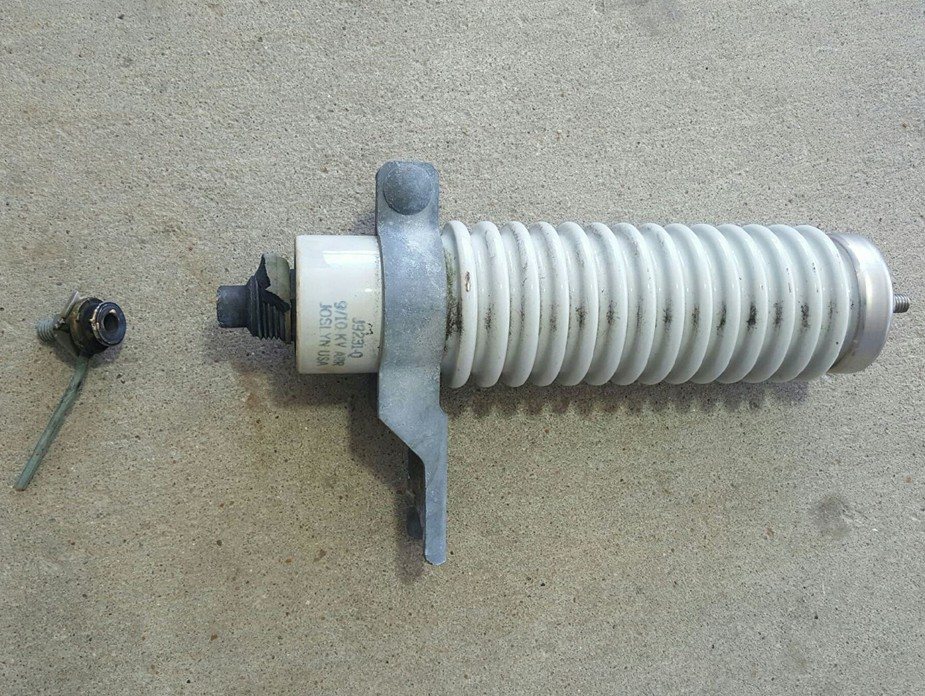
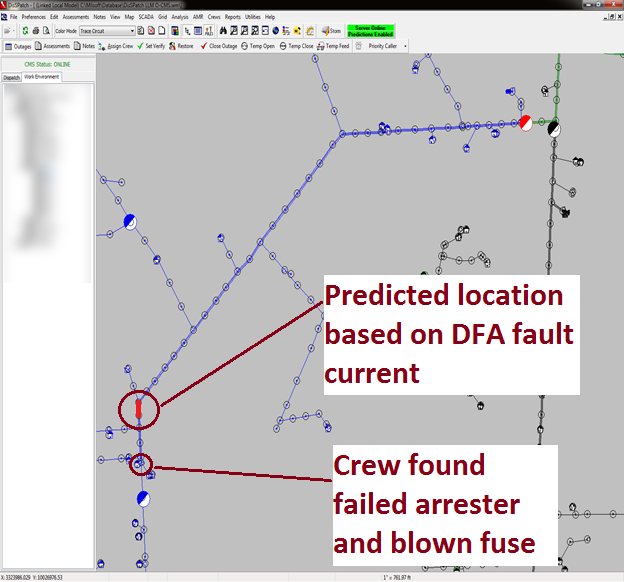
On a hot, fair-weather afternoon, members reported blinks downstream of an unmonitored 70 A recloser serving 157 members, so crews began searching everything past it. A DFA alert then arrived with the fault current and a probable cause: a failed arrester. The operator entered the current into the circuit model and redirected the crews, who found the failed arrester and a blown transformer fuse three spans from the prediction.
An outage nobody reported
An operator noticed a DFA fault report that no outage call had followed. The DFA fault current, entered into the circuit model, predicted a location. Pinging meters there found two out of service one span away, and a crew found a blown line fuse. The meters served two water wells at an unmanned site, where the outage might otherwise have lasted much longer.
Two trees, 63 members
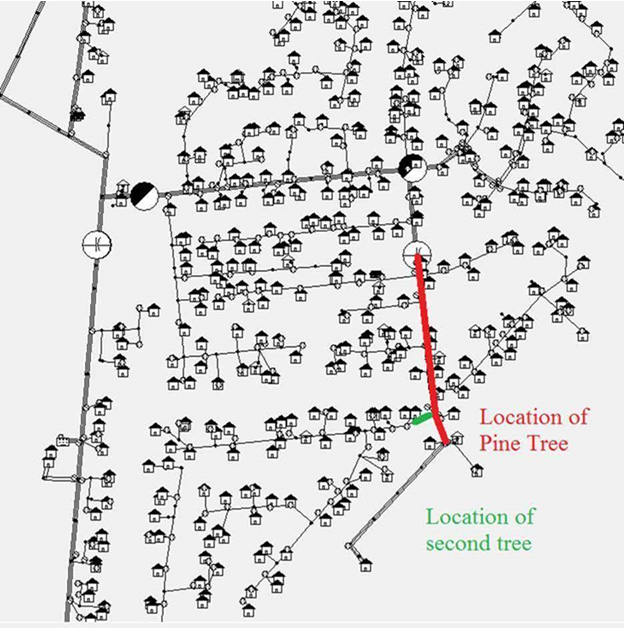
Over 35 days, DFA flagged three matching phase A faults: 1,125 A within 1%, three cycles, the recloser open 1.5 to 1.6 seconds. Nobody lost power. The co-op found the recloser doing the work (an unmonitored 100 A unit, confirmed by meter blink counts) and ran DFA's fault current through the model beyond it only. Crews found two trees close enough to lean into the line in wind. Pruning them likely averted an outage for 63 members.
Why it matters
Bluebonnet's own summary: DFA lets it respond to outages sooner, sometimes before they occur, and detect events such as recurrent faults and arcing clamps that otherwise go undetected.
“A crew was already en route, with the information that the likely cause was a failed arrester, before we even got the call from the affected location.”Thomas Ellis, manager of engineering, Bluebonnet Electric Cooperative (Texas A&M Engineering Experiment Station, 2018)
Keep reading

A live wire on the ground, reported within minutes
A storm tore down a three-phase section. DFA tracked the energized conductor for seven minutes and flagged a probable wire down.

A glowing substation switch, found within two hours
No calls, no SCADA alarm, normal meters. DFA reported series arcing, and a lineman found the failing switch before two days of storms.

Two blinks a day apart led to a charred crossarm beside a pine forest
Nobody lost power for more than a blink. DFA matched the two faults, and the crew found a conductor burning into its crossarm six spans from the prediction.