
Case studies · Failing equipment
A failing capacitor switch, found and fixed the same day
The arcing barely moved the current. DFA classified it, sized the bank, and the crew arrived knowing which switch had failed.
- Where
- Rural overhead circuit, United States
- Equipment
- 900 kvar switched line capacitor
- DFA reported
- Capacitor arcing, phase B
- Found
- A heavily damaged vacuum switch
- Outcome
- Repaired the same day
What DFA reported
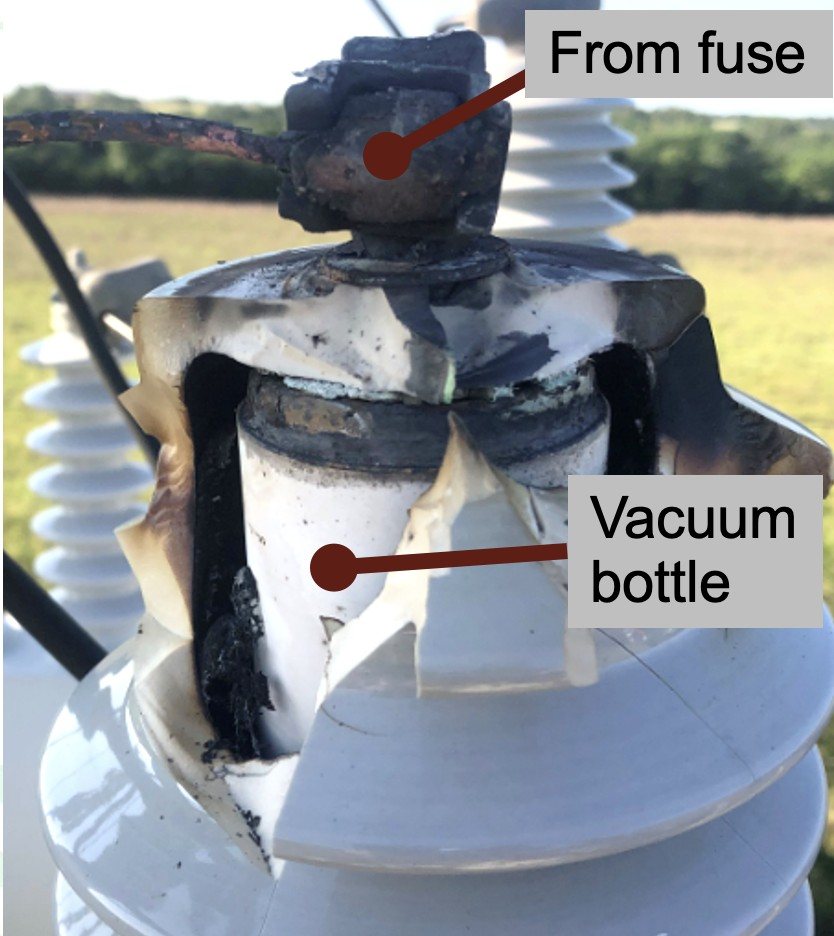
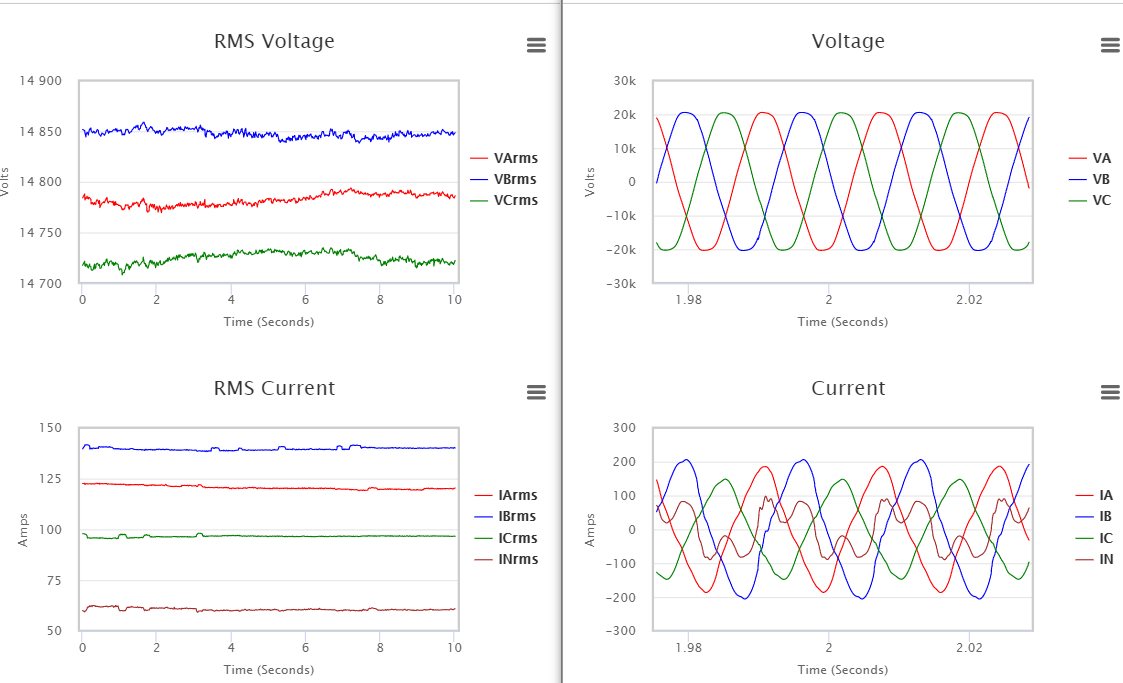
Early one morning a 900 kvar switched capacitor bank switched off. Two seconds later phase B began conducting again, with arcing: its vacuum switch had partly lost vacuum. The arcing barely disturbed current and voltage, yet DFA classified it as capacitor arcing and posted it on the dashboard. It sized the bank at 900 kvar from the change in vars, and the switching time matched the utility's records.
What the crew found
Finding the bank was trivial. The crew arrived knowing the phase B vacuum switch had likely failed, found it heavily damaged, and repaired it the same day.
Why it matters
No other system reported the failure. Capacitor arcing sends transients to every device on the bus and has failed arresters and other capacitor banks on the same and neighboring circuits.
“To PG&E's knowledge, DFA is the only system that can detect capacitor arcing.”E. Schoenman and J. Mead, Pacific Gas and Electric, T&D World, August 2021
Keep reading

79 warnings over 200 days, then a cable fitting found and fixed
Pulses of hundreds to thousands of amperes cleared themselves every time. DFA tracked all 79, and an acoustic camera found the failing fitting.

Fourteen hours of escalating faults, ended at one arrester
DFA watched a failure build overnight. When a 3,000 A burst placed it at the substation, a lineman went straight there.

A glowing substation switch, found within two hours
No calls, no SCADA alarm, normal meters. DFA reported series arcing, and a lineman found the failing switch before two days of storms.