
Case studies · Failing equipment
Fourteen hours of escalating faults, ended at one arrester
DFA watched a failure build overnight. When a 3,000 A burst placed it at the substation, a lineman went straight there.
- Where
- Distribution substation, United States
- DFA reported
- A developing failure; 10 short-lived faults by 07:00
- Located by
- A 3,000 A burst at 12:55
- Found
- A failing arrester on the substation getaway cable
- Lead time
- More than 14 hours
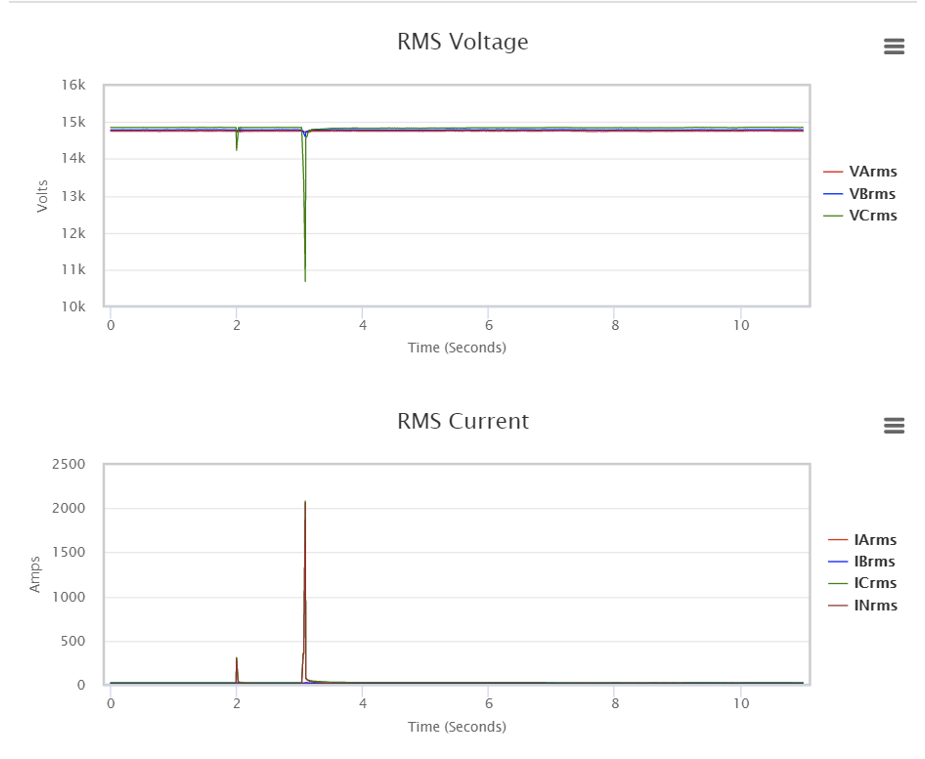
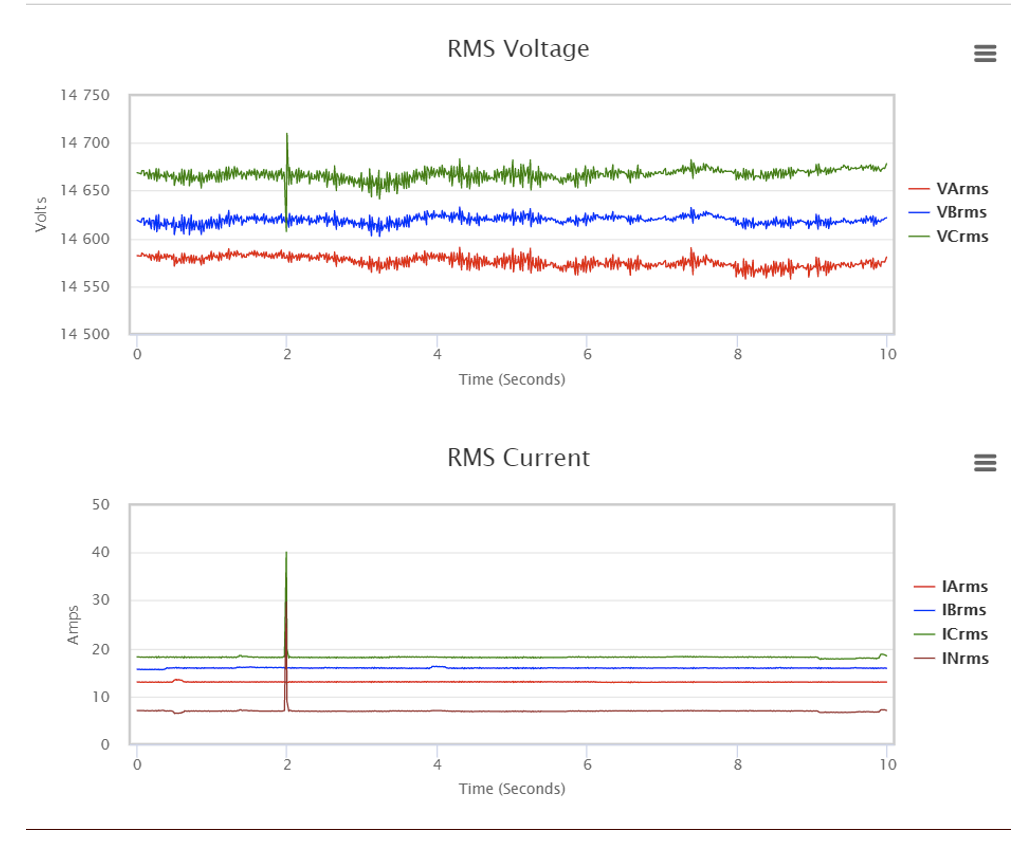
What DFA reported
Late one evening DFA began reporting a developing failure: brief bursts of about 100 A, then hours of low-level arcing under 5 A on one phase. By 07:00 the next morning it had reported 10 short-lived faults, coming closer together and growing, a sign that final failure was near. A fault of almost 3,000 A at 12:55 placed the problem in or very near the substation.
What the crew found
The utility sent a lineman. Finding nothing obvious, he disconnected the lightning arrester on the getaway cable for the affected phase, and all fault activity on the circuit stopped.
Why it matters
The relay logged one minimum-trip record and nothing more. The utility engineer said he would not have sent a crew on that record alone. A failed arrester could have caused an outage for every customer on the circuit and other hazards, such as a fire ignition.
Keep reading

A failing capacitor switch, found and fixed the same day
The arcing barely moved the current. DFA classified it, sized the bank, and the crew arrived knowing which switch had failed.

79 warnings over 200 days, then a cable fitting found and fixed
Pulses of hundreds to thousands of amperes cleared themselves every time. DFA tracked all 79, and an acoustic camera found the failing fitting.

A glowing substation switch, found within two hours
No calls, no SCADA alarm, normal meters. DFA reported series arcing, and a lineman found the failing switch before two days of storms.