

Case studies · Failing connections
31 days of warnings from one clamp, and what the first hunt taught
DFA tracked a failing clamp for a month on a 268-mile oilfield circuit. The co-op's first series-arcing search found it as it burned through.
- Utility
- Concho Valley Electric Cooperative
- DFA reported
- Probable failure of switch or clamp, phase B
- Circuit
- 25 kV, 268 miles of exposure, 427 meters
- Warning
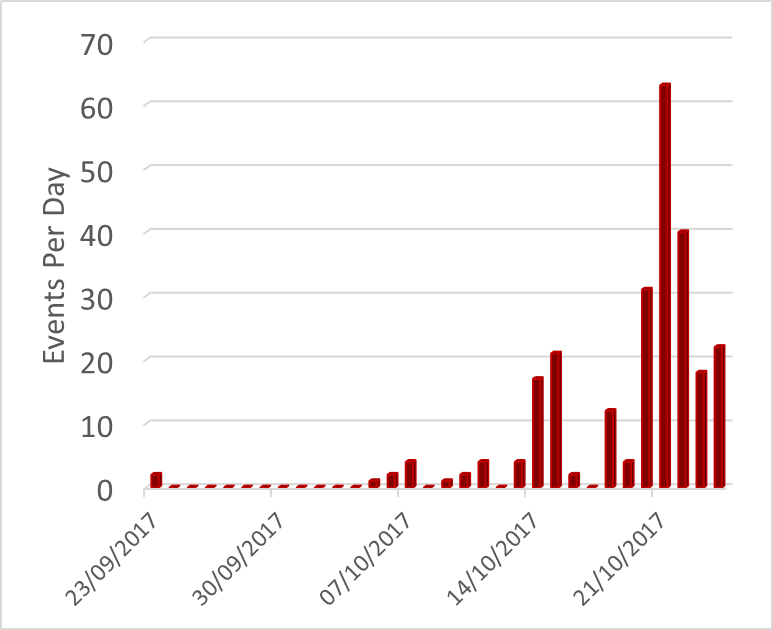
- 250 arcing events over 31 days
- Outcome
- Clamp recovered; burned through as the crew arrived
What DFA reported
DFA reported a probable failure of a switch or clamp on phase B, with about 194 kVA of load beyond it. Over 31 days it recorded 250 arcing events, 174 of them in the last five days. The arcing was active only about 0.1% of the time, too intermittent to catch reliably with radio-frequency or thermal checks. DFA also tied together 27 phase B recloser operations that nobody had connected.
What the crew found
It was the co-op's first series-arcing hunt. The circuit model listed 18 candidate locations, and the clamp was at the last one. The search took 40 hours, and the clamp burned through just before the crew reached it.
Why it matters
The lesson carried into later cases: locate series arcing by the load beyond the device, not by distance, and ping meters during a flare-up to bracket it. The recovered clamp has a hole burned clean through its jaw.
Keep reading

A glowing substation switch, found within two hours
No calls, no SCADA alarm, normal meters. DFA reported series arcing, and a lineman found the failing switch before two days of storms.

Failing clamps, caught arcing and replaced
A failing clamp can arc for weeks before it burns through. Three finds show how DFA turns that warning into a work order.

A broken jumper, 12 km out, fixed without an unplanned outage
The one customer it served noticed nothing. DFA reported each flare-up within about a minute, and meter pings led the crew to the pole.