

Case studies · Failing connections
Failing clamps, caught arcing and replaced
A failing clamp can arc for weeks before it burns through. Three finds show how DFA turns that warning into a work order.
- Where
- Texas utilities
- DFA reports
- Probable failure of switch or clamp
- With it
- The phase and the load beyond the connection
- Located by
- Load beyond the device, meter pings, patrol
- Risk
- Hot particles, burn-down, ignition
What DFA reported
A clamp that loses its grip starts series arcing: it interrupts the current passing through it instead of leaking current to ground. On a circuit carrying 300 A, the signal may be a few amperes. DFA recognizes it at the substation and estimates how much connected load sits beyond the failing connection, which tells the crew which part of the circuit to search.
Arcing in a national forest
DFA reported an arcing line clamp on a circuit in a Texas wildfire-mitigation deployment. There was no outage, no SCADA alarm and no customer call. The utility went looking and found the clamp actively arcing on a pole line in a national forest, where it could have dropped hot particles or burned the line down.
More than a week before any other warning
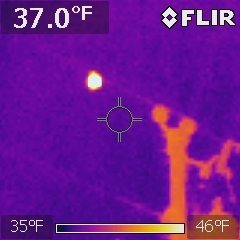
DFA reported a failing hot-line clamp more than a week before any conventional notice. An infrared check confirmed a hot spot in service. The removed clamp, at the top of this page, shows the cavity the arc ate into its jaw.
A member's flickering lights
Bluebonnet Electric Cooperative
A member reported flickering lights. They were steady when the troubleman arrived; he tightened the secondary connections and planned to install a recording voltmeter. DFA kept reporting a probable failure of a switch or clamp, so the co-op sent a patrol to look for a primary clamp. The crew found it a few spans upstream and replaced it, with no recorder and fewer labor hours.
Why it matters
Documented cases show a connection can arc for hours, days or weeks before it fails. Each of those days is a chance to replace it on your schedule instead of after it burns down.
Keep reading

A glowing substation switch, found within two hours
No calls, no SCADA alarm, normal meters. DFA reported series arcing, and a lineman found the failing switch before two days of storms.

31 days of warnings from one clamp, and what the first hunt taught
DFA tracked a failing clamp for a month on a 268-mile oilfield circuit. The co-op's first series-arcing search found it as it burned through.

A broken jumper, 12 km out, fixed without an unplanned outage
The one customer it served noticed nothing. DFA reported each flare-up within about a minute, and meter pings led the crew to the pole.